An abdominal CT scan is an X-ray test. The scanner takes hundreds of thin slices of your belly, from the dome of the diaphragm down to the pelvis. Software stacks them into a 3D picture of the liver, gallbladder, pancreas, spleen, stomach, bowel, kidneys, blood vessels and lymph nodes. The scan itself takes a few seconds. The whole visit takes about 15 minutes. At Oberig Clinic we use Siemens Somatom go.Top and Somatom Confidence scanners with a reduced radiation dose. Radiologists of the Diagnostic Department write the report.
What the scan covers
The standard protocol covers the whole upper abdomen and the space behind it. The radiologist checks the size, shape and density of the liver, then moves on to the bile ducts, pancreas, spleen, adrenals, kidneys, ureters, stomach and bowel walls, the aorta and the lymph nodes. They look for free fluid or free air. Bones in the scan area get a look too: lower ribs, vertebrae, pelvic bones.
Doctors often scan the belly and the pelvis together. Many problems cross from one area to the other: lymph nodes, metastases, fluid, abscesses. That is why most items in our price list are combined scans. The radiologist picks the right range based on your referral and symptoms.
When doctors order it
Most often, CT comes in when ultrasound gave no clear answer. Or no answer at all. Typical cases are sudden belly pain with suspected appendicitis, pancreatitis, gallbladder inflammation, diverticulitis, bowel obstruction or a perforated ulcer. After an injury, CT quickly shows a torn liver or spleen, a hematoma or internal bleeding.
Planned scans come from a gastroenterologist, surgeon, oncologist or urologist. Reasons include tumors and suspected spread, cancer staging and follow-up after treatment. Others are enlarged lymph nodes, or cysts and lumps seen on ultrasound. Another group is kidney stones, colic, blood in the urine and planning for abdominal surgery. Patients often tell us the same story. "It has hurt for a month. The ultrasound was normal. It is not getting better." In these cases CT often finds the answer other tests missed.
With or without contrast
A plain scan without contrast is enough to look for kidney and ureter stones, free air after a perforation, calcifications and bone changes. It also works to recheck a known lump. It is the fastest option. No limits after it.
Most other questions need IV contrast. An automatic injector puts an iodine-based dye (up to 150 ml) into a vein. The scanner then images your belly several times, in the arterial, venous and delayed phases. Tumors, inflammation, abscesses and vessels take up the dye in different ways. This difference tells a cyst from a tumor, or a hemangioma from a metastasis. At Oberig Clinic up to 70% of CT scans use IV contrast. The CT room has everything needed to treat a reaction to the dye.
What contrast shows
Contrast brings out changes that blend into normal tissue on a plain scan. The doctor sees tumors of the liver, pancreas, kidneys and adrenal glands, along with their edges, their contact with blood vessels and any growth into nearby organs. Metastases show up. So do enlarged lymph nodes, abscesses, a clot in the portal vein, an aortic aneurysm, dead tissue in pancreatitis and an inflamed bowel wall. For a surgeon, the scan is a map of the operation. For an oncologist, it shows whether treatment works.
A few organs people ask about most. A liver CT uses three or four contrast phases. This tells hemangiomas, cysts, focal hyperplasia and tumors apart. Before liver surgery the radiologist can also measure liver volume. For gallstones, ultrasound beats CT. Cholesterol stones are hard to see on CT. But CT shows complications of gallbladder inflammation and widened ducts well. For the pancreas, CT is the best test we have: pancreatitis, cysts, tumors, calcifications.
Stomach and bowel on CT
CT does not replace gastroscopy. Only a scope sees the lining, erosions, ulcers and small polyps. But CT shows how thick the stomach wall is and how deep a tumor has grown. It also shows whether lymph nodes and the liver are involved. In stomach cancer, contrast CT is a required step for staging.
The bowel works the same way. A standard scan picks up an inflamed bowel wall, diverticulitis, obstruction, abscesses and large tumors. To look for colon polyps there is a separate test, virtual colonoscopy (CT colonography). You clean out the bowel first, as for a regular colonoscopy. The bowel is then filled with air, and software builds a 3D model of the wall. Doctors choose it when a regular colonoscopy is not possible or did not reach the end.
CT or MRI of the abdomen
Both tests make slices, but they work in different ways. CT uses X-rays and takes seconds. Abdominal MRI uses a magnetic field and no radiation. It takes 30 to 40 minutes, and you need to hold your breath many times. Each has its strengths:
| Situation | CT | MRI |
|---|
| Sudden pain, injury, bleeding | first choice, answer in minutes | rarely, takes too long |
| Kidney and ureter stones | first choice | sees calcium poorly |
| Cancer staging, spread to lungs and belly | in one scan | better for the liver |
| Small liver lesions, bile ducts | adds detail | more accurate, MR cholangiography |
| Pregnancy, young age, frequent repeats | best avoided | no radiation |
| Pacemaker, metal implants | fine | often not allowed |
The short version. CT is the usual pick for emergencies, cancer and stones. MRI is better for a closer look at the liver and bile ducts, and when radiation should be avoided. The doctor who refers you makes the call.
How to prepare
Prep is simple. It still matters, because it affects how sharp the images are. Water fills out the stomach and bowel, and their walls show up sharper. Here is what to do:
- on the day of the scan you can have liquid food, but stop at least 4 hours before,
- 1 to 1.5 hours before the scan, drink up to 1 liter of plain still water in small portions,
- bring your referral if you have one, and past results: ultrasound, CT and MRI reports and discs,
- if you are over 65, have diabetes or kidney disease, get a blood creatinine test in advance to check your kidney filtration rate (eGFR),
- if you have reacted to contrast before, book an anesthetist visit in advance. They will prescribe special prep.
With an eGFR below 30, we cannot give contrast. If you have diabetes and take metformin, and your eGFR is 30 to 44, stop the drug 48 hours before the scan. Restart it 48 hours after. Tell the doctor about allergies, thyroid disease and any medicines you take.
What happens during the scan
You lie on your back on the scanner table with your arms above your head. The table moves slowly through a wide ring. No tunnel. The technician asks you through a speaker to hold your breath for a few seconds. This matters. Breathing blurs the images. For a contrast scan, a nurse places a small IV line in your arm first. When the dye goes in, many people feel warmth through the body or feel like they need to pee. That is normal. It passes in a minute.
The scan takes about 15 minutes, complex protocols up to 30. After contrast you stay in the clinic for up to 30 minutes so we can watch for reactions. Drink plenty of water for the rest of the day. It helps your kidneys clear the dye. No other limits. You can eat, work and drive.
Understanding your report
The radiologist describes each organ: size, outline, density and how it takes up contrast. "No focal lesions" means no tumors, cysts or abscesses were found. Reports often mention kidney cysts, liver hemangiomas or silent gallstones. These are chance findings. Most need no treatment, only follow-up.
A report only makes sense next to your symptoms and lab results, so your referring doctor or one of our gastroenterologists will explain it. If you had CT before, bring the old discs. A comparison over time often tells more than one scan. It shows whether a lump is growing or not.
Common questions
Can I eat before the scan?
Light liquid food, yes, but no later than 4 hours before. Water is fine and needed: up to 1 liter in the 1 to 1.5 hours before the scan.
Is the radiation dangerous?
Modern scanners use a lower dose. It is about the same as a standard X-ray study of the digestive tract. Missing a tumor or bleeding is a far bigger risk.
Do I need a referral?
Adults do not. Tell the radiologist about your symptoms so they choose the right protocol. Children need a doctor's referral.
Can contrast cause a reaction?
Mild reactions like nausea or a rash happen in about 3% of cases. Severe ones happen in about 0.04%. The room is equipped for emergency care.
Is it safe in pregnancy or while breastfeeding?
CT is not advised in pregnancy, except for life-threatening situations. After contrast, pause breastfeeding for 24 hours.
When will I get the results?
You get the report and disc within 24 hours, except on weekends and public holidays. In urgent cases the doctor gets the result right away.
Abdominal CT prices
The price depends on the range: the belly alone, or the belly and pelvis together. A contrast scan of the abdomen costs UAH 5,885. With the pelvis added, prices start at UAH 7,410. The price list has no separate items for the liver, stomach or bowel. These organs are part of the base protocol and cost the same. For colon polyps there is virtual colonoscopy. Current prices:
| Test (CT) | Price |
|---|
| Abdomen and pelvis, no contrast | UAH 3,415 |
| Abdomen with IV contrast | UAH 5,885 |
| Abdomen and pelvis with contrast | UAH 7,410 |
| Abdomen and pelvis with contrast injection | UAH 7,625 |
| Virtual colonoscopy (CT colonography) | UAH 4,495 |
| 3D post-processing, liver volume | UAH 3,245 |
Prices are from the clinic price list as of 01.10.2026 and may change. Please check the current price with our contact center before your visit.
Why choose Oberig Clinic for CT
- Three CT scanners. 128, 64 and 20 slices, including a Siemens Somatom go.Top with a reduced dose. The clinic is a Siemens reference center.
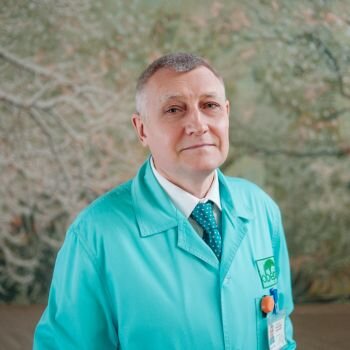
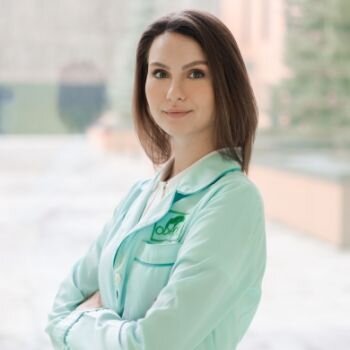
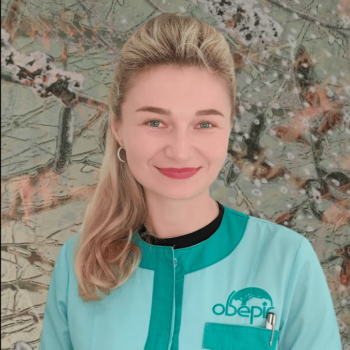
- Experienced radiologists. Reports come from Taras Matsiievskyi, head of the Diagnostic Department, Iryna Mykytenko and Oleksandr Lysenko, all senior-grade doctors.
- Results in 24 hours. We report scans to American College of Radiology protocols. You get the report and disc the next working day.
- Treatment in one place. Gastroenterologists, surgeons, oncologists and urologists all work here. You do not need to look for other doctors to go from scan to treatment plan.
Address: 3 Zoolohichna St, buildings "G" and "V", Kyiv. Book online at https://my.oberig.ua/ua/appointment/ or call +38 044 521 30 03.