CT colonography, or virtual colonoscopy, checks your large bowel on a CT scanner with no scope inside. The bowel is gently filled with air. The scanner takes a series of thin slices in a few seconds, and software turns them into a 3D view of the bowel wall from inside. The doctor flies through the bowel on screen, just like in a regular colonoscopy, looking for polyps, narrowing and pouches. At Oberig Clinic we do it on multislice CT scanners in the Diagnostic Department. No anesthesia. It takes 10-15 minutes.
Checking the bowel without a scope
Many people put off a bowel check for years because they fear the scope or anesthesia. Virtual colonoscopy solves exactly that. A small tube goes in only a few centimeters to let air in, and the scanner does the rest. The method is part of international guidelines for colorectal cancer screening in people at average risk from 45-50.
It suits people who cannot have a colonoscopy or worry about anesthesia. It suits patients whose colonoscopy was incomplete because the scope could not pass a bend or narrowing. It suits older people with heart or lung problems. And it suits anyone who wants screening but will not agree to a scope.
Who should get screened
Most changes in the large bowel cause no symptoms for a long time. A polyp grows for years, and while it is small, it is easy to remove. Doctors advise a planned check, not a check when something hurts. People without symptoms or family history start screening at 45-50. Start earlier and check more often if close relatives had polyps or colorectal cancer, if you had polyps removed before, if you have chronic bowel inflammation, obesity, type 2 diabetes or you smoke.
Some symptoms need a doctor soon: blood in the stool or black stool, a change in bowel habits that lasts several weeks, weight loss you cannot explain, anemia, ongoing belly pain. In that case, see a gastroenterologist first. They will pick the right test for you.
Why bother with screening at all if you feel fine? Because most bowel cancers start as a harmless polyp that takes around ten years to turn dangerous, and a test every five years gives you several chances to catch and remove it before it grows. Screening is one of the few checks that can prevent a disease, not just find it.
What the test shows
It finds polyps from 6 mm and larger growths, narrowing of the bowel, diverticula, and changes in the bowel's position and length. The 3D view shows folds from every side. The doctor sees areas around bends too. The slices also show the belly and pelvic organs: liver, kidneys, lymph nodes, aorta. Sometimes this finds changes the patient never suspected. Most of these are harmless, like simple kidney cysts. If something needs a closer look, the report says so, and your doctor plans the next step.
It has limits. Very small polyps under 5 mm and flat lesions can be missed. No biopsy or polyp removal is possible during CT. If the scan finds a polyp of 6 mm or more, the next step is a regular colonoscopy to remove it. There is a small radiation dose, though modern protocols keep it low.
CT colonography or colonoscopy
Both aim to find polyps and wall changes early. Colonoscopy stays the gold standard. It sees the lining directly, catches the smallest changes and lets the doctor remove a polyp and take a biopsy on the spot. Virtual colonoscopy is more comfortable and safer for people at risk, needs no anesthesia and shows the organs around the bowel. If it finds no polyps, repeat it in 5 years.
In practice, if the chance of finding a polyp that needs removal is high (symptoms, blood in the stool, family history), the doctor usually suggests colonoscopy right away. For routine screening without symptoms, or when colonoscopy is not possible, CT colonography is a sound option. A gastroenterologist helps you decide.
CT or MRI: which to choose
For the large bowel and polyp screening, CT colonography is the standard. It is fast and sharp, and the air in the bowel gives clear contrast. MRI is used more for the small bowel (MR enterography), for Crohn's disease and for the rectum and tissues around it. MRI uses no radiation, but it takes longer and shows small colon polyps less well. If you are unsure which scan you need, bring your referral and symptoms to the gastroenterologist. They will match the test to the question.
How to prepare
Accuracy depends on prep. Leftover stool can look like a polyp or hide one. The bowel is cleaned much like before a colonoscopy. You get a detailed plan when you book. The general steps:
- 2-3 days before, switch to a low-fiber diet: no vegetables, fruit, greens, whole-grain bread, seeds or nuts
- the day before, have a light breakfast and soft food until lunch, then clear liquids only
- the day before, after lunch, take a laxative as your doctor tells you
- if prescribed, drink a contrast agent that tags leftover contents to help the doctor tell them from polyps
- on the day, do not eat, water is fine until 2 hours before
Here is a rough guide for meals in the days before:
| OK to eat | Better to skip |
|---|
| boiled rice, white pasta, white bread | vegetables, fruit, berries, greens |
| boiled lean meat, chicken, fish | whole-grain bread, bran cereals |
| eggs, low-fat cottage cheese, kefir | seeds, nuts, corn, beans |
| clear broth, tea, water, clear juice without pulp | milk, fizzy drinks, red and dark drinks |
If the doctor plans IV contrast, there is one more step. You need a recent creatinine test and to tell us about any allergy to iodine contrast. Tell the doctor if you have diabetes and take metformin, or have kidney or thyroid disease.
Plan the day before the test as a quiet day at home. The laxative works within a few hours and you will need a toilet close by. Drink plenty of clear fluids so you do not get dehydrated. If you take blood thinners, diabetes medicine or iron pills, ask your doctor in advance how to adjust them, because some of them need a pause and others must not be stopped.
How the test goes
You lie on your side on the CT table. The doctor places a thin soft tube a few centimeters into the rectum and slowly lets in air or carbon dioxide to open up the bowel. It feels like bloating and pressure. Unpleasant, but not painful. Then you lie on your back, hold your breath for 10-15 seconds, and the scanner does the first pass. Next you turn onto your tummy for the second pass. This moves air and fluid around. Now the doctor sees every area.
If IV contrast is needed, it goes through a small line in your arm. The whole test takes 10-15 minutes. No anesthesia. You can drive home and go back to your day. The bloating fades in an hour or two. Results are ready within 24 hours, except weekends and holidays.
Why two scans? On your back, fluid and leftovers settle on the back wall of the bowel and air rises. On your tummy, it is the other way round. Comparing both, the doctor tells a real polyp that stays put from leftover stool that moves. That is why you follow the commands and hold your breath during the scan.
Reading the images takes longer than the scan. The radiologist reviews the bowel in 2D and 3D, measures every finding and checks the organs outside the bowel. The report lists the size and place of any polyps and a recommendation: colonoscopy, follow-up or repeat screening in 5 years.
Who should not have it
The test is not done during active bowel inflammation (a flare of ulcerative colitis or Crohn's disease, diverticulitis), with suspected perforation, soon after bowel surgery, or in pregnancy. IV contrast is not given with severe kidney failure or iodine contrast allergy. The doctor makes the final call.
Common questions
Does it hurt?
No. The only unpleasant part is the bloated feeling from the air. It lasts a few minutes and passes after the test, usually once you pass the gas. Carbon dioxide is absorbed faster than room air, and the bloating fades sooner with it.
How often can I have it?
For screening with a normal result, once every 5 years. More often only if your doctor orders it, for example to watch a polyp.
What if a polyp is found?
Your gastroenterologist will order a colonoscopy to remove and test it. Small polyps under 6 mm are often just watched. If you need the colonoscopy soon, ask about doing it the same or next day, while your bowel is still clean.
Can it be combined with CT of other organs?
Yes. Belly and pelvic organs show on the same slices. If a closer look is needed, the doctor can extend the protocol. More on abdominal CT.
Do I need someone to come with me?
No. There is no anesthesia or sedation. You can come and go on your own, even by car.
What can I eat afterward?
Your usual food. Keep the first meal light and drink more water that day to recover from the bowel prep. Soup, rice or yogurt is a good start. Your normal rhythm usually comes back in a day or two.
Who reads the images?
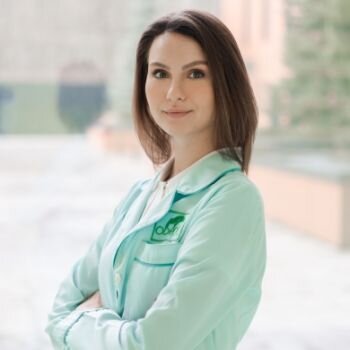
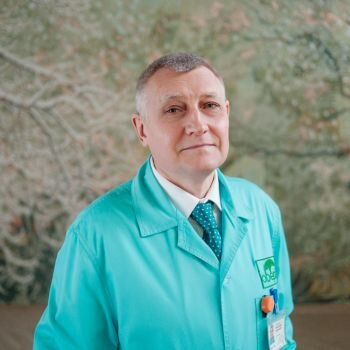
Radiologists of the Diagnostic Department, including head of department Taras Matsiievskyi and his deputy Iryna Mykytenko.
CT colonography price at Oberig Clinic
Book with the Diagnostic Department at 3 Zoolohichna St, Kyiv. The base test price is below. If you need IV contrast, the contrast line is added to the colonography price.
| Test | Price |
|---|
| Virtual colonoscopy (CT colonography) | UAH 4,495 |
| Contrast enhancement for multislice CT | UAH 2,645 |
| Colonoscopy (for comparison) | UAH 1,978 |
Prices are from the clinic price list as of 26.10.2026. They may change. Please check the current price with the contact center.
Why choose Oberig Clinic
- 3 CT scanners (128, 64 and 20 slices) and low-dose protocols.
- The Diagnostic Department is a Siemens reference center, follows American College of Radiology protocols and gives results within 24 hours.
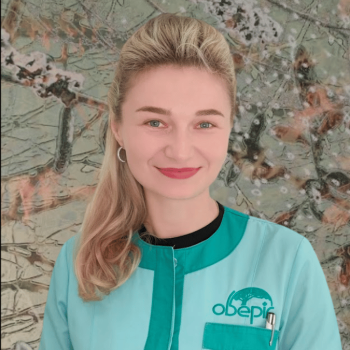
- Experienced radiologists: T. Matsiievskyi, I. Mykytenko, O. Lysenko, I. Frunze, A. Korniichuk, M. Kovratko.
- Gastroenterologists and an endoscopy unit in one clinic: if a polyp is found, you can have the colonoscopy right here.
Address: 3 Zoolohichna St, buildings G and V, Kyiv. Book online at https://my.oberig.ua/ua/appointment/ or call +38 044 521 30 03.