Hepatomegaly: why the liver gets enlarged and when it is dangerous
29 October 2026


29 October 2026
Your ultrasound report says "hepatomegaly", and you reach for your phone. Take a breath. The word only means your liver is bigger than the doctor expected. It isn't a disease on its own. It's a clue: something is making the liver grow, and that something needs to be found.
Below we explain what an enlarged liver means, how to read the numbers in your ultrasound report, what most often makes the liver grow, if you should worry about cancer and which tests doctors usually order. Most importantly, why doctors treat the cause, not the liver itself.
Hepatomegaly is a liver larger than normal. Some reports say "hepatomegaly of the liver". That's redundant, since "hepato" already means liver, but the meaning is the same.
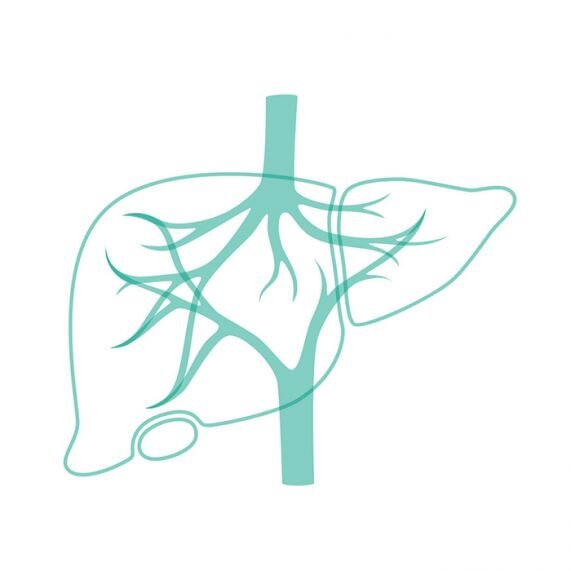
The liver sits on the right side under your ribs. It's the largest gland in the body. It filters blood coming from the stomach and bowel, clears toxins and drugs, makes bile, blood proteins and clotting factors, and stores energy. When it gets overloaded, it reacts with swelling, fat buildup or blood backing up. And it grows.
The MSD Manual lists an enlarged liver among the signs of liver disease, next to jaundice and fluid in the belly. In other words, it points to some underlying process. It is not a disease in itself. So the word "hepatomegaly" without a cause says nothing yet about your outlook.
The sonographer measures the liver in several planes. Our ultrasound department uses these reference values for adults: right lobe (oblique vertical size) up to 150 mm, left lobe up to 60-70 mm. Other labs may use slightly different limits. That's why a doctor interprets your numbers, not a chart from the internet.
| What the report says | What it means | What usually happens next |
|---|---|---|
| Size within normal limits, even texture | A normal liver | Nothing, if you have no symptoms and normal blood tests |
| Enlarged by 1-2 cm, even texture | A borderline result, often just body build | Liver tests, a follow-up scan if the doctor advises |
| Enlarged and brighter than usual | Most often fatty liver | Blood tests, weight and blood sugar check, elastography |
| Enlarged with uneven texture or spots | Needs a closer look | A hepatologist visit, CT or MRI |
This is one of the most common findings. A slightly larger liver with normal blood tests and no symptoms often turns out to be just how you're built. A tall person with a broad chest has a bigger liver than a petite one. There is also an anatomical variant called Riedel's lobe: a tongue-like extension of the right lobe that looks like enlargement on ultrasound.
But "only 1-2 cm" doesn't mean "forget about it". If the liver texture has changed, or you carry extra weight, have diabetes, drink alcohol or have raised liver enzymes, even a small increase is worth looking into. Especially if the numbers grow on a follow-up scan.
What can make the liver bigger? MedlinePlus lists dozens of conditions, but in practice doctors mostly see a few groups. Each works differently, and each needs different treatment.
The first group is fat buildup: non-alcoholic fatty liver disease and alcohol-related liver damage. The second is inflammation, meaning viral hepatitis B and C, autoimmune hepatitis or drug-induced liver injury. The third is blood backing up because of heart failure or clots in the liver veins. In early liver cirrhosis, when scarring remodels the tissue, the liver may be enlarged, and later it often shrinks. Storage diseases are rarer. Hemochromatosis means too much iron, and Wilson disease means too much copper. Blood disorders and tumors stand apart. They include leukemia, lymphoma, metastases, cysts and hemangiomas.
The most common of these is fatty liver disease. The NHS calls it a common condition that usually causes no symptoms. Many people have it without knowing. They find out by chance, during tests for something else.
To find out why your liver is enlarged, the doctor works step by step. What do you drink and which medicines do you take? Do you have extra weight or diabetes? Have you had hepatitis? How is your heart? Simple blood tests plus an ultrasound often give the answer.
| Cause | Clues | Who to see |
|---|---|---|
| Fatty liver disease | Extra weight, diabetes, high cholesterol, a bright "white" liver on ultrasound | Hepatologist, gastroenterologist, endocrinologist |
| Alcohol-related damage | Regular drinking, raised GGT | Hepatologist |
| Viral hepatitis | Positive hepatitis B or C markers, raised ALT and AST | Hepatologist, infectious disease specialist |
| Blood backing up from the heart | Shortness of breath, swollen legs, wide liver veins | Cardiologist |
| Blood disorders | Abnormal blood count, enlarged spleen | Hematologist |
The liver breaks down most drugs, so some of them can damage it with long-term use or overdose. Known examples include an overdose of certain painkillers, some antibiotics and tuberculosis drugs, certain heart rhythm medicines and anabolic steroids. Supplements and herbal blends for "weight loss" or "liver support" carry their own risk: what's inside doesn't always match the label.
Bring a list of everything you take to your appointment, even vitamins and teas. Don't stop prescribed medicines on your own. Your doctor will decide what to swap and how to do it safely.
Often there are none at all. The liver tissue has no pain receptors. Only its capsule hurts when quick swelling stretches it. That's why most people find out by chance, during a routine ultrasound.
If symptoms do show up, they look like this:
The last few, especially yellow skin and fluid in the belly, mean you should see a doctor within days, not at your next routine checkup.
In the vast majority of cases, no. Most often the cause is fat in the liver, hepatitis, alcohol or blood backing up. These conditions can be treated or kept well under control.
Tumors can enlarge the liver too, and it's worth knowing this calmly. One key point: the liver more often contains cancer that has spread from other organs than cancer that started in the liver itself, says the MSD Manual. If the ultrasound shows spots, your doctor will order a CT or MRI with contrast and tumor markers, and a biopsy if needed. Enlargement without spots and with a smooth texture is much less often linked to cancer.
Warning signs: weight loss without dieting, a hard lumpy liver, jaundice that keeps getting worse and spots on the ultrasound. With these, don't wait.
If your liver is enlarged, testing goes from simple to more complex:
At Oberig clinic, you can do all of this in one place. Our Gastro Center follows the standards of the European and American liver associations (EASL and AASLD), and its doctors are members of both. The ultrasound department has 17 scanners, 7 of them expert class. Elastography and steatometry are done during the same scan, and our own lab, MRI, CT and Liver Surgery Center are all at one address. You don't have to travel across the city to get from a finding on ultrasound to a treatment plan.
There are no pills that "shrink the liver". You treat an enlarged liver like any other sign: remove what caused it. Once the cause is gone, the liver often returns to normal size.
What will a doctor prescribe? That depends on the diagnosis. Hepatitis B and C call for antiviral treatment, autoimmune hepatitis for immune-suppressing treatment. If blood backing up is enlarging the liver, the heart failure is treated. Hemochromatosis is managed with regular blood removal, and Wilson disease with copper-binding drugs. Fatty liver disease requires treatment of diabetes and cholesterol.
With mild or moderate enlargement, treatment often starts with lifestyle, not pills. For fatty liver disease, the basics are gradual weight loss, more movement and no alcohol. "Liver protection" products taken without a diagnosis don't remove the cause, so don't pick them yourself. Some herbal "detox" products and supplements harm the liver on their own.
Your diet depends on the cause, but the basics are similar. No alcohol. Fewer sugary drinks, juices and pastries: the liver turns extra sugar, especially fructose, into fat. More vegetables, whole grains, fish, beans and olive oil. Moderate portions and regular meals without fasting: losing weight too fast hurts the liver just like overeating.
Add movement. Even brisk walking a few times a week helps your liver. In fatty liver disease, the liver usually gets smaller as you lose weight.
The number on the ultrasound isn't the danger. The process behind it is. Untreated hepatitis or fatty liver disease leads to fibrosis over the years, and then to cirrhosis. The goal of testing is to catch changes while they can still be stopped.
See a doctor within days if the enlargement comes with jaundice, itching, dark urine or weight loss. Call an ambulance if you vomit blood or have black tarry stools, sudden severe belly pain, confusion or extreme drowsiness. These are signs of complications that only a hospital can treat.
Children's livers are relatively larger than adults', and in babies the edge normally sticks out a little below the ribs. That's why a child's liver size is judged by age, not by an adult chart.
Symptoms in children usually depend on the cause. A fever with an infection (mono, hepatitis), yellow skin, poor weight gain or a swollen belly. The causes also differ from adults: infections, inborn metabolic disorders, problems with the bile ducts, heart and blood, and more and more often fatty liver disease in teenagers.
What should parents do? Don't give "liver medicines" or herbs on your own. Book a pediatrician and bring the ultrasound report and blood tests. The pediatrician will decide if your child needs a pediatric gastroenterologist. If your child is sluggish, turning yellow or refusing food, get help the same day.
Yes, if the cause is removed. In fatty liver disease, the liver shrinks as you lose weight. After acute hepatitis, it shrinks as you recover. Scarring from cirrhosis is much less reversible.
Better not. Even if alcohol isn't the cause, it adds strain and speeds up fibrosis. There is no safe dose for a sick liver, so it means stopping completely, not "just a little on holidays".
Most often it's a borderline result, an anatomical variant or early fatty liver. Your doctor will check the texture on ultrasound, do elastography and may suggest a follow-up scan in a few months.
A hepatologist or gastroenterologist. If that's not possible right now, start with a general practitioner. They will order basic tests and refer you to the right specialist.
Your doctor decides. With mild enlargement and normal tests, it's usually repeated in a few months. With chronic hepatitis or cirrhosis, more often.
This combination often points to high pressure in the portal vein due to liver disease, or to a blood disorder. It needs a more thorough workup without delay.
Come in for a checkup if your report says "hepatomegaly", your liver tests are off or the heaviness under your right ribs won't go away. At Oberig clinic, we perform an abdominal ultrasound on an expert-class ACUSON Sequoia (Siemens) scanner and, if needed, elastography during the same visit. A hepatologist from our Gastro Center will go over the results, explain what is enlarging your liver and how to treat it.
Book by phone at +38 044 521 30 03 or online.