Biliary dyskinesia: symptoms, types and treatment
6 November 2026


6 November 2026
Heaviness under the right ribs after a fatty meal, a bitter taste in your mouth, no stones on the ultrasound, and then your report or medical record says "dyskinesia". In Ukraine, doctors give this diagnosis very often, to adults and children alike. Yet modern international medicine uses the term for a much narrower and rarer problem.
Below we honestly explain what dyskinesia is, how today's Rome IV criteria describe it, which symptoms really point to it, what "hypo" and "hyper" types mean, how it's tested and what helps. No scare stories and no needless "bile-flow courses".
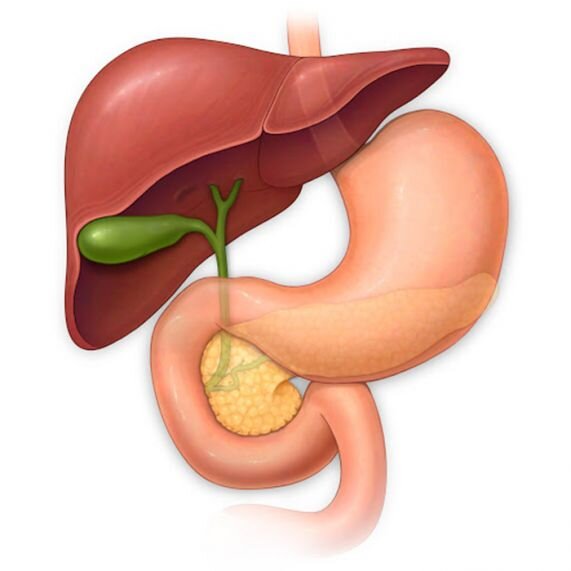
Dyskinesia means a movement problem. The gallbladder should squeeze at the right time and push bile into the bowel, and the sphincter of Oddi, a muscle ring at the end of the duct, should relax on cue. When this teamwork breaks down, bile stagnates or comes out in bursts, and pain appears.
In post-Soviet practice, almost any discomfort under the right ribs often gets called dyskinesia. International gastroenterologists are stricter. Under the Rome IV criteria cited by the MSD Manual, there are two separate conditions: functional gallbladder disorder and functional sphincter of Oddi disorder. Both are diagnosed only when there is typical biliary pain, and stones, inflammation and other structural problems have been ruled out.
In other words, it's a diagnosis of exclusion. First, your doctor looks for things that cause similar symptoms: tiny stones that a standard ultrasound misses, cholecystitis, gastritis, an ulcer, irritable bowel syndrome. We cover cholecystitis and a folded gallbladder in separate articles.
The key sign is biliary pain. It comes in attacks of steady pain below the breastbone or under the right ribs that last at least half an hour, spread to the right shoulder blade and get in the way of daily life. Between attacks, you feel normal.
Most of these symptoms aren't specific. A bitter taste, bloating and heartburn are more often linked to the stomach or bowel. So if you don't have attacks of pain, just "poor digestion", your doctor will look for another cause.
A word on the skin. Some sources claim dyskinesia shows up on the skin. In fact, yellow skin and strong itching point to blocked bile flow in the ducts or liver disease. That's no longer a functional disorder, and it needs urgent testing.
| Functional disorder | Gallstones | Acute cholecystitis | |
|---|---|---|---|
| Pain | Attacks of biliary pain, normal in between | Colic attacks, often after fatty food | Constant, more than 6 hours |
| Fever | No | No | Often |
| Ultrasound | No stones or inflammation | Stones visible | Stones, thick wall, fluid |
| Blood tests | Usually normal | Normal between attacks | High white cell count |
| What to do | Gastroenterologist, tests | Surgeon, planned surgery if attacks occur | Ambulance, hospital |
Stop eating, lie down and wait out the first minutes. If a doctor has already prescribed an antispasmodic for exactly this situation, take it as instructed. Don't experiment with new medicines or bile-stimulating remedies. If the pain passes, book a consultation the next day: it's important to find out if stones are behind it.
Pain lasting more than 6 hours, fever, yellow skin or eyes, dark urine, pale stools or repeated vomiting are signs of cholecystitis, a stone in the duct or pancreatitis. Call an ambulance. Don't reach for a bile-stimulating remedy.
In local practice, dyskinesia is split into types based on how the gallbladder squeezes. You'll still see this in ultrasound reports, so here's what it means. International guidelines don't use it. What matters is not the "type" but two questions: is the pain typical biliary pain, and have other causes been ruled out?
| Type | What happens | Typical complaints |
|---|---|---|
| Hypokinetic (hypomotor) | The gallbladder squeezes weakly, bile stagnates | A dull, aching heaviness on the right, bitterness, worse after fatty food |
| Hyperkinetic (hypermotor) | The gallbladder squeezes sharply or the sphincter doesn't relax | Short, sharp attacks of pain, often after stress or exertion |
| Functional sphincter of Oddi disorder | The sphincter at the end of the duct misbehaves | Attacks of biliary pain, sometimes abnormal liver tests during an attack |
Hypokinetic dyskinesia means the gallbladder empties slowly. Doctors often diagnose it with an ultrasound and a "test breakfast": they measure the gallbladder before and after a meal. But this test depends on many conditions, and on its own it doesn't prove that the pain comes from the gallbladder.
The hyperkinetic type is the opposite: the gallbladder squeezes too strongly or the sphincter goes into spasm. The complaint is short, sharp attacks of right-sided pain. This is easy to confuse with colic from small stones, so your doctor will check for them first.
The exact cause is often unknown. Increased sensitivity of the bile ducts, hormones and irregular eating probably play a role. Doctors link several factors to worse symptoms.
The usual culprits are long gaps between meals, late-night overeating and lots of fatty and fried food. Rapid weight loss and strict diets also do harm. Inactivity matters. In women, symptoms can get worse during pregnancy and with other hormonal changes. Stress and poor sleep have a noticeable effect too. The disorder often goes hand in hand with other functional digestive disorders, such as irritable bowel syndrome.
MedlinePlus reminds us that the gallbladder stores bile for digesting fat and releases it when we eat. That's why your eating routine has such a big effect on how it works.
Testing is designed to rule out everything that looks like this disorder first. MSD states plainly that the best diagnostic approach is still unclear, so your doctor pieces the picture together from several tests.
The usual first step is an abdominal ultrasound. It shows stones, sludge, the gallbladder wall and ducts, sometimes with a check of emptying after a meal. Endoscopic ultrasound can find small stones under 1 cm that a standard scan misses. Blood tests (bilirubin, ALT, AST, alkaline phosphatase, GGT and lipase) tell the most when taken during an attack. MR cholangiography gives a map of the bile ducts with no radiation and no contrast. If the symptoms look like gastritis or an ulcer, your doctor will add a gastroscopy.
Internationally, gallbladder emptying is measured precisely with cholescintigraphy and cholecystokinin, a hormone that makes the gallbladder contract. In Ukraine this test is hard to access, so doctors more often rely on ultrasound, blood tests and MRCP together. At Oberig clinic, MR cholangiography is done on Siemens 1.5 and 3 Tesla scanners, and radiologists write the report.
Treatment starts with routine, not pills. Regular meals let the gallbladder empty on schedule, and for many people that's enough. After that, it depends on how strong the symptoms are and what testing showed.
For severe, frequent attacks, when everything else has been ruled out, treatment sometimes includes removing the gallbladder. MSD mentions laparoscopic cholecystectomy or endoscopic cutting of the sphincter as options for some patients. But results aren't guaranteed, so this decision is made carefully, together with a surgeon.
Your doctor chooses medicines based on your specific complaints. They usually fall into a few groups. During an attack, antispasmodics relieve spasm and pain. Other drugs regulate gut movement. If there's sludge or a risk of stones, the doctor may prescribe medicines that make bile thinner. Related problems such as gastritis or irritable bowel syndrome are treated separately.
Bile-stimulating "courses", liver flushes and "cleanses" without testing are dangerous. If there's a small stone nobody noticed, a bile stimulant can push it into the duct and cause jaundice or pancreatitis. That's why tests come first, then treatment.
Food is the foundation of treatment. It doesn't mean fasting or strict bans:
If you tend to get constipated, more fiber helps. If certain foods trigger pain, cut back on them. You don't need to drop fat completely: a little oil actually helps the gallbladder contract.
Belly pain is very common in children, and most often it's functional, meaning no organ is damaged. Children get a "dyskinesia" diagnosis from a single ultrasound more often than they should. The shape and emptying of a child's gallbladder on ultrasound is often just a normal variant.
For children, treatment usually comes down to regular meals, enough water, physical activity and handling stress. Medicines are rarely needed. If your child has belly pain, nausea or changes in stools, see a pediatric gastroenterologist to rule out other causes rather than treating your child "for the ultrasound".
Pregnancy hormones relax muscles, and the gallbladder empties more slowly. That's why heaviness on the right and a bitter taste are more common at this time. It usually passes after birth. Bile-stimulating remedies and herbs aren't suitable during pregnancy without a doctor's advice, and severe pain or yellowing means a same-day checkup.
There's no fixed timeline. For many people, symptoms ease within a few weeks of sorting out meals and sleep. Sometimes they come back during stressful periods or irregular eating.
Not by itself. It's a functional disorder. It doesn't damage the liver and doesn't turn into cancer. But stagnant bile can contribute to sludge and stones, so your eating routine matters.
Plain water, and enough of it. Bile stimulants without a reason and without an ultrasound can do harm if there's a stone. There's no proven benefit from "healing" mineral waters.
A fold is mostly an anatomical feature often seen on ultrasound. It doesn't necessarily affect how the gallbladder works and rarely causes pain on its own.
Yes. Stress and poor sleep change how the gut and bile ducts move, and many people notice attacks during tense periods. Regular meals, sleep and physical activity often help as much as any pill. If stress clearly drives your symptoms, it's worth working on it directly, sometimes with a specialist.
A gastroenterologist. They'll rule out other causes and plan your tests.
Come in for a consultation if you get pain under the right ribs after eating, your report says "dyskinesia" and you're not sure about the diagnosis. At Oberig clinic, we perform ultrasound on an expert-class ACUSON Sequoia (Siemens) scanner and MR cholangiography if needed. A gastroenterologist from our Gastro Center will help you find out what's really causing your symptoms and if you need treatment.
Book by phone at +38 044 521 30 03 or online.