Can chronic pancreatitis be cured: symptoms, treatment and diet
4 November 2026


4 November 2026
If your doctor has written "chronic pancreatitis" in your report, the first question is usually: is this forever? The short answer: it can't be fully cured, but it can be controlled. People live with this diagnosis for years, work and travel. The difference between "I'm doing fine" and "constant flare-ups" mostly comes down to a few choices you make yourself.
Below we explain why chronic pancreatitis progresses, how to tell a flare-up from remission, what your doctor may prescribe, how to eat and when surgery is needed.
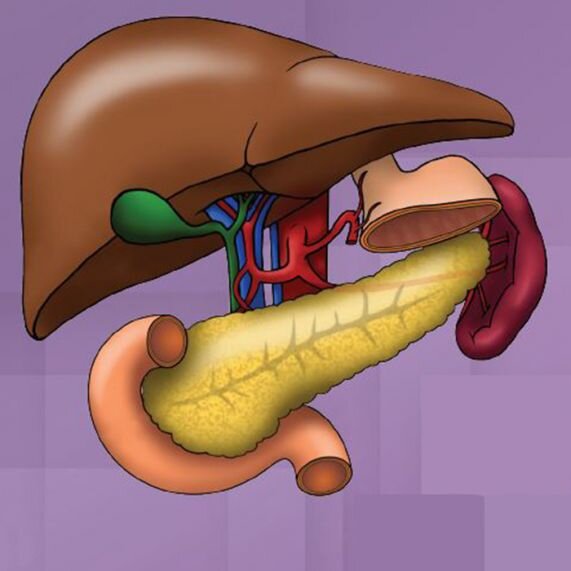
Your pancreas makes digestive enzymes and insulin. With long-term inflammation, its tissue gradually scars, the ducts narrow and calcium deposits form. These changes don't go away. The MSD Manual describes it exactly this way: lasting inflammation that leaves permanent damage and slowly reduces the gland's ability to make enzymes and hormones.
That's the difference from an acute attack, after which the pancreas usually recovers. We cover the acute form, its symptoms and emergency care in a separate article on acute pancreatitis.
There are two main causes, and both are in plain sight: years of drinking and smoking. MSD calls them the major risk factors, and smoking matters on its own: the more you smoke, the higher the danger, even without alcohol. Both speed up the disease. Other causes include repeated acute attacks, gallstones, very high triglycerides, autoimmune disease and inherited gene changes.
The most common symptom is pain in the upper belly that spreads to the back. It gets worse after eating, especially fatty food, and can be constant or come in attacks. Over the years the pain sometimes fades, but not because things are better. The gland is simply "burning out".
The second group of symptoms comes from a lack of enzymes. Food isn't digested properly, and the NHS lists signs such as:
These symptoms can look like irritable bowel syndrome or gallstones, so the diagnosis is made only after testing.
The signs are the same as in men. According to MSD, the disease is more common in men, since more of them drink and smoke heavily. In women, doctors more often find other causes: gallstones, autoimmune disease or inherited changes. Upper belly pain in women is often blamed on the gallbladder or stomach, so it's important to get tested rather than pick a treatment yourself.
The disease comes in waves. Periods when almost nothing bothers you alternate with flare-ups. Knowing which phase you're in matters, because it shapes both treatment and diet.
| Flare-up | Remission | |
|---|---|---|
| Pain | Severe, upper belly, into the back | None or mild, after breaking the diet |
| Digestion | Nausea, vomiting, bloating | Possible bloating and greasy stools without enzymes |
| Blood tests | Amylase and lipase may rise | Often normal |
| What to do | See a doctor, call an ambulance for severe pain | Diet, enzymes if prescribed, follow-up |
Flare-ups are often triggered by alcohol, a heavy fatty meal, smoking or a stone. A flare-up can be mild, or it can look exactly like an acute attack. Severe pain, vomiting, fever or yellow skin means calling an ambulance, not sitting it out at home.
In remission, the goal is to make it last as long as possible. No alcohol and no cigarettes, regular meals and enzymes if they were prescribed. Follow-up checks once a year or more often, as your doctor advises. That way complications are caught before they cause symptoms.
There's no single test that confirms the diagnosis. According to the NHS, a doctor first rules out other causes of your symptoms. MSD adds that the diagnosis is usually made with imaging.
An abdominal ultrasound is usually the first step. It checks the size and structure of the gland, calcium deposits and a widened duct. CT or MRI with MRCP gives the most accurate view of tissue and duct changes. A stool test for pancreatic elastase shows if you make enough enzymes. Glucose and HbA1c are checked so diabetes isn't missed. A complete blood count, liver tests, vitamin D and, if needed, lipids complete the picture.
You can have these tests done at Oberig clinic's own lab, with results sent to your personal online account. See the list on our laboratory diagnostics page.
A gastroenterologist decides on treatment after testing. Treatment has three goals: relieve pain, replace missing enzymes and keep blood sugar under control. Only a doctor prescribes medicines, because doses depend on how your pancreas works and what you eat.
When the pancreas can't keep up with digestion, enzyme capsules are prescribed with meals. Painkillers range from simple to stronger ones, and your doctor chooses and monitors them. Acid-reducing drugs help the enzymes work better. Vitamins A, D, E and K are topped up if you're low on them. If diabetes develops, it is treated as well.
Pain in chronic pancreatitis has several causes: high pressure in a narrowed duct, inflammation around nerves, pseudocysts. So the approach differs. Sometimes enzymes and painkillers are enough. Sometimes an endoscopic procedure is needed to widen the duct or remove a stone. In complex cases, surgery. Don't put up with severe pain or "numb" it on your own: your doctor will choose a plan and check for complications.
Self-treatment is risky. Enzymes taken "by eye" without a reason don't help, and unmonitored painkillers can harm your stomach or liver and hide a complication.
Sometimes pills aren't enough. When a stone or narrowing blocks the duct, a pseudocyst forms, or pain persists despite treatment, endoscopic procedures or surgery are considered. At Oberig clinic, these cases are handled by the Center for Liver, Pancreas and Transplant Surgery, led by Professor Oleg Kotenko, MD, PhD.
Food is half the battle. The goal is simple: don't overload the pancreas and get enough nutrients, because people with chronic pancreatitis often lose weight.
What you can eat every day:
| Better choices | Limit or avoid |
|---|---|
| Boiled, stewed, baked, steamed | Fried, smoked, fast food |
| Lean meat, fish, poultry | Lard, fatty pork, sausages |
| Porridge, pasta, bread | Rich pastries, cream cakes |
| Low-fat cottage cheese, yogurt, kefir | Fatty cheeses, cream |
| Water, weak tea, fruit compote | Alcohol in any amount, sugary soda |
Alcohol and smoking are off the table, for good. Strict limits you don't need do harm: low weight and vitamin shortages make the disease worse. If you're losing weight, your doctor may suggest more calories and the right enzyme dose, not a new diet.
The diagnosis doesn't mean giving up your usual life. You can work, exercise at a moderate level and travel. A few habits make things easier. Carry your enzymes with you if they're prescribed: eating without them brings bloating and pain. When traveling, choose simple dishes over experiments with local food. With a cold or stomach bug, drink enough and don't skip meals. Keep a short diary of what you ate and when it hurt. Within a few weeks, you'll see what triggers your pain.
There's no single number that fits everyone. Your outlook depends less on years since diagnosis and more on stopping the disease from progressing. People who quit drinking and smoking, follow their diet and take prescribed enzymes usually live long lives without severe complications.
The danger lies in complications. The NHS lists problems absorbing food and osteoporosis, a special type of diabetes (type 3c), cysts around the pancreas and narrowed bile ducts. MSD adds that chronic pancreatitis raises the risk of pancreatic cancer. That's why follow-up checks aren't a formality.
Chronic pancreatitis is rare in children. The usual causes are inherited gene changes, inborn duct abnormalities, cystic fibrosis or autoimmune disease. Repeated bouts of belly pain, poor weight gain or greasy stools are a reason to see a pediatric gastroenterologist.
No, scar tissue doesn't disappear. But stopping the disease from getting worse and living without flare-ups is realistic if you give up alcohol and smoking and follow your doctor's treatment.
No. Even small amounts speed up damage to the pancreas and trigger flare-ups.
If your pancreas doesn't make enough enzymes, yes, with every meal. Your doctor sets the dose based on your weight, symptoms and test results.
Not everyone, but the risk grows over the years. That's why blood sugar is checked regularly.
A gastroenterologist. If a complication needs a procedure, a surgeon joins in.
No. Herbs and "cleanses" don't restore scar tissue, and some put extra strain on the liver. Your time is better spent on tests and proper treatment.
Come in for a consultation if upper belly pain keeps coming back, you've noticed changes in your stools or weight loss, or you already have a diagnosis and need a treatment plan. At Oberig clinic, we perform ultrasound on an expert-class ACUSON Sequoia (Siemens) scanner, run tests in our own lab and do a CT or MRI if needed. A gastroenterologist from our Gastro Center will choose your treatment, and complex cases are discussed with surgeons from our Center for Liver, Pancreas and Transplant Surgery.
Book by phone at +38 044 521 30 03 or online.