Computed tomography is an X-ray test. The scanner takes hundreds of thin slices of your body, and software builds them into a detailed layered and 3D image. At Oberig Clinic, CT scans are done in the Diagnostic Department on modern Siemens scanners, and radiologists read every study. You book a time, there is no long queue, and your report is ready within 24 hours.
Multislice CT: what it shows
Modern CT is multislice CT (MSCT). The tube spins around you in a spiral, and the detector records dozens of slices in one turn. A scan takes seconds. The image stays sharp even for organs that move as you breathe. Some referrals say "spiral CT". Today spiral CT is done on multislice scanners, so it is the same test.
CT shows bones, lungs, abdominal and pelvic organs, kidneys, and blood vessels after contrast. It sees a lot. Doctors find fractures, lung nodules, kidney stones, cysts, tumors, inflammation, and narrowed or widened vessels. For soft tissue, cartilage, ligaments and the spinal cord, MRI often works better. Your doctor picks the method for the exact question.
When doctors order a CT scan
The most common reasons are injuries, pain in the chest, belly or back, a cough that won't go away, suspected kidney stones, headaches and dizziness. Cancer care relies on it too. Oncologists use CT to stage a tumor and check how treatment works. Surgeons use it to plan an operation. In an emergency, CT gives a fast answer, because the scan itself takes only a few seconds.
Your referring doctor picks the area and decides on contrast. No referral? A radiologist will help you choose before you book. The list of CT areas below explains each test.
Preparation and what happens during the scan
- Bring your referral, if you have one, and earlier CT, MRI or ultrasound reports on a disc.
- For abdominal, pelvic and cancer screening CT, drink up to 1 liter of still water in small portions 1-1.5 hours before the test. Light liquid food is fine up to 4 hours before.
- Before contrast CT, people over 65, with diabetes or kidney disease need a creatinine test to calculate eGFR.
- Had an allergic reaction to contrast before? Book a visit with an anesthesiologist in advance.
- Children under 6 may need sedation, so they first see a pediatric anesthesiologist.
Full instructions are on the CT preparation page. You lie on the scanner table, usually on your back. The table slides slowly through the ring. You keep still and hold your breath for a few seconds when asked. The whole visit takes about 15 minutes, up to 30 in complex cases. After contrast CT, you stay at the clinic for up to 30 minutes. Then you go back to your normal day.
Safety and radiation dose
One scan gives about the same dose as an X-ray of the digestive tract, or a few years of natural background radiation. Our Somatom go.Top and Somatom Confidence scanners use reduced-dose protocols. That matters. Pregnant women get CT only when it is vital. After contrast, avoid breastfeeding for 24 hours.
Contrast goes into a vein through an automatic injector. Mild reactions like nausea or a rash happen in about 3% of patients. Severe ones are much rarer, and the CT room is fully equipped for emergency care. Tell the doctor about allergies, kidney or thyroid disease, and if you take metformin.
Frequently asked questions
Does a CT scan hurt?
No. You feel nothing. With contrast, you may feel warm for a few seconds.
When will I get the results?
Within 24 hours, except weekends and public holidays. You can take the images on a disc or a USB drive.
Do I need a referral?
It helps, because your doctor names the area and the question. Without one, a radiologist will help you pick the right test.
Which is better, CT or MRI?
CT is usually better for bones, lungs and fast answers. MRI suits the brain, joints and spine with nerves. Your doctor makes the final call.
Where can I get a CT scan in Kyiv without a long wait?
At the Diagnostic Department of Oberig Clinic, 3 Zoolohichna Street. You choose the time when you book, and the wait on site is short.
What affects the price?
The area scanned, the number of areas, and contrast. Contrast is a separate item in the price list.
Does multislice CT cost more than regular CT?
No. All our scanners are multislice, so there is no extra charge. You pay for the area scanned.
Is spiral CT priced differently?
No. There is no separate "spiral CT" service. Spiral CT is done as MSCT, and the price matches the area in the table.
CT scan prices in Kyiv
The price depends on the area and on contrast. You pay per study. Prices differ between Kyiv clinics because of scanners, protocols and who reads the images. Compare more than the price. Check how fast you get the report and who writes it. The table lists the most common tests, and each area page shows its own price.
| Test | Price |
|---|
| Brain CT | UAH 2,445 |
| Head or neck CT (one area) | UAH 2,780 |
| Chest CT | UAH 2,860 |
| Abdomen and pelvis CT | UAH 3,415 |
| CT of one musculoskeletal area | UAH 2,455 |
| CT angiography of arteries, one area (with contrast) | UAH 5,985 |
| Contrast enhancement for MSCT | UAH 2,645 |
| CT screening of chest, abdomen and pelvis with contrast | UAH 8,865 |
Prices are from the clinic price list and may change. Please check the current price with our contact center.
Why choose Oberig Clinic for CT
- 3 CT scanners (128, 64 and 20 slices). The new building has Somatom go.Top and Somatom Confidence with reduced dose.
- The Diagnostic Department is a Siemens reference center. We follow American College of Radiology protocols. Results come within 24 hours.
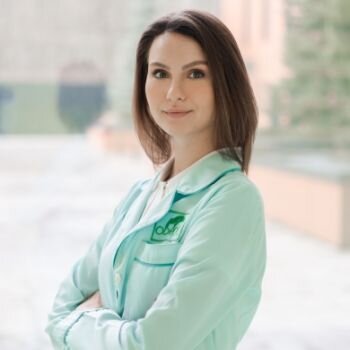
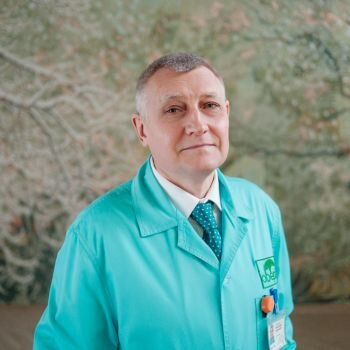
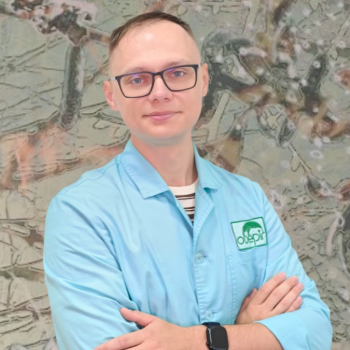
- Radiologists: Taras Matsiievskyi (head of department), Oleksandr Lysenko (highest category), Dmytro Kalemeniev, Iryna Frunze, Maksym Kovratko.
- You get your CT and see the right specialist in the same clinic, no extra trips.
Address: 3 Zoolohichna Street, buildings G and V, Kyiv. Book online at https://my.oberig.ua/en/appointment/ or call +38 044 521 30 03.
Which areas we examine with CT
Choose an area to see what the scan shows, how to prepare and how much it costs:
General
Head and neck
Chest and heart
Abdomen and pelvis
Spine
Bones and joints
Vessels (CT angiography)
Screening
Before a contrast-enhanced scan, read how to prepare for CT.


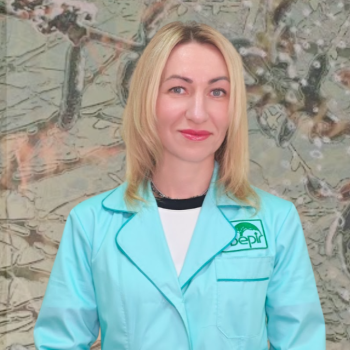 Viktoriya Viktorivna Danylenko